
f.k.a. Flying Scooter / Flying Jets
Opened: 1941
Closed: 1982
Re-Opened: 19 Apr 1986
Location: North Midway / Central Midway / South Midway
Designed By: Alvin Bisch
Manufactured By: Bisch-Rocco Amusement Company – Chicago, Illinois
Ride Model: Flying Scooter (park model)
Motor Manufactured By: Falk Corporation – Milwaukee, Wisconsin
Max Speed: 30 mph
Max Height:
Ride Duration: ~2 min
Structural Height:
Footprint: 100 ft Ø
Aerial Operating Circle:
Number Of Tubs/Planes: 10
Ride Capacity: 20 (2 per tub)
Lagoon’s Flying Aces is a classic ride which allows riders to control their cable-suspended plane as they spin around a central tower.
In addition to being Lagoon’s third-oldest ride still at the park, it’s one of only a dozen or fewer original examples of the ride still operating in the world.
The Flying Aces at Lagoon have been renamed, repainted and relocated many times. There’s a chance that Lagoon wasn’t even this ride’s first home.
A set of shop drawings acquired by Lagoon when the ride was installed includes the job number 3709. The manufacturer, Bisch-Rocco, very likely used what was a common numbering system at the time where the first two digits denote the year it was made (1937) and the last two digits refer to where it fell in the production line-up for that year. This suggests the ride was the ninth one manufactured by Bisch-Rocco in 1937. Since we know it opened at Lagoon in 1941, it’s possible that it operated at another park or carnival before that, or that it just wasn’t sold for four years. Another possibility is that the shop drawings were originally from another owner. As of now, there are no other hints as to whether it opened elsewhere first or not.

FIRST FLIGHTS AT LAGOON
When it opened at Lagoon in 1941, the ride simply went by the name given to it by Bisch-Rocco. A brochure advertising the new ride used both “Flying Scooter” and the plural “Flying Scooters”. Another noteworthy feature from this brochure is that the tubs (the part of the plane riders sit in) were sleek and rounded, more like an actual airplane. In those days, the tubs were made with Duramold (a composite of birch and resin) and the fins and rudders were made of stretched canvas. It’s unknown whether the photo used shows Lagoon’s Flying Scooter or if it was a photo from another park, provided by the manufacturer, since the brochures may have been printed before the park opened for the year.
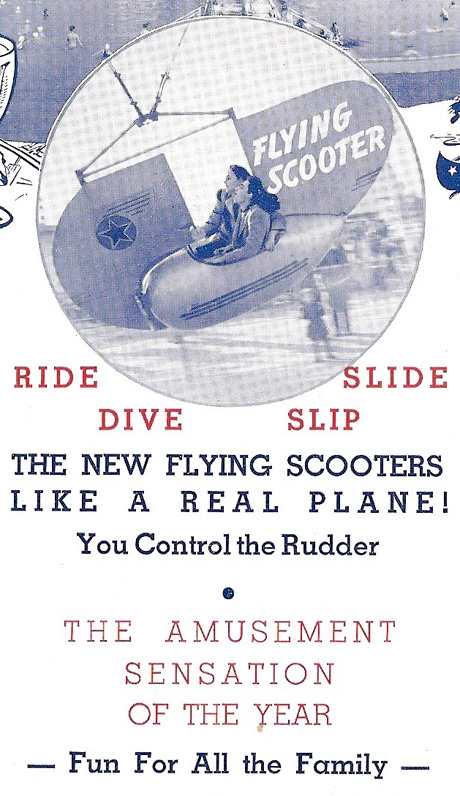
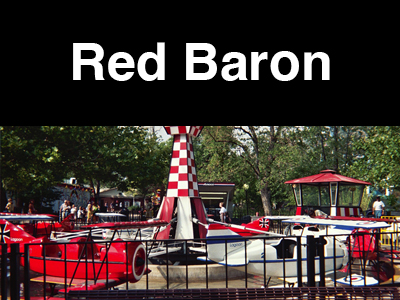
The first location of the Flying Scooter at Lagoon was on the north side of Lagoon Lake, not far east of the Carousel, roughly where the Red Baron ride is in Kiddieland today. Before the Flying Scooter, this area was part of the old Pleasure Island (which was basically a garden in the middle of the lake) and later part of the sunken gardens.
Soon after the ride’s first decade at Lagoon, the Flying Scooter suffered about $500 in damage from gale force winds on 16 May 1952. In addition to destroying lighting and signs, the wind storm also claimed two of the planes. However, the storm wasn’t enough to stop Lagoon from opening that year. The ride may or may not have operated with two missing planes, but replacements were likely shipped from Bisch-Rocco within a few weeks. Also uncertain is how similar the replacements were in appearance and materials to the originals.
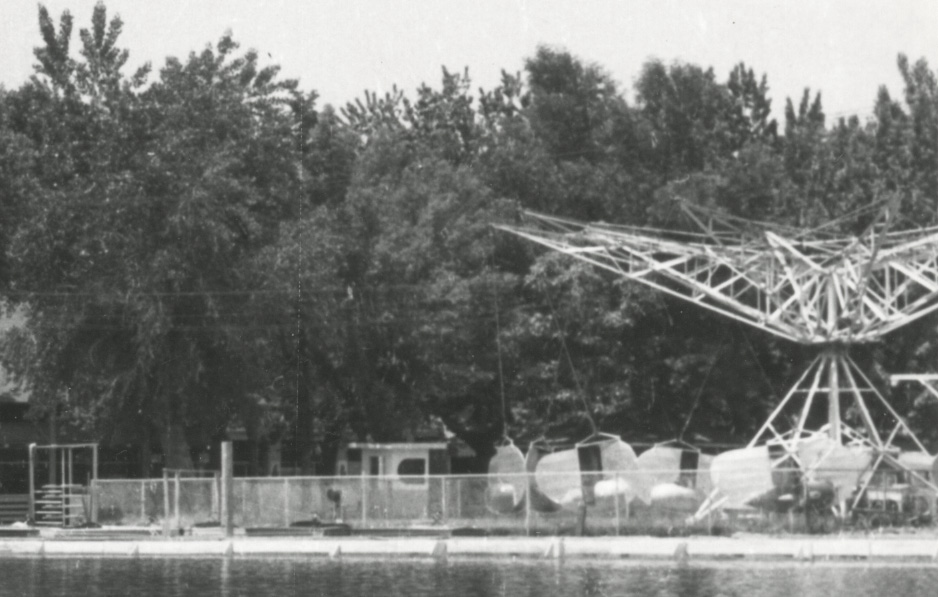
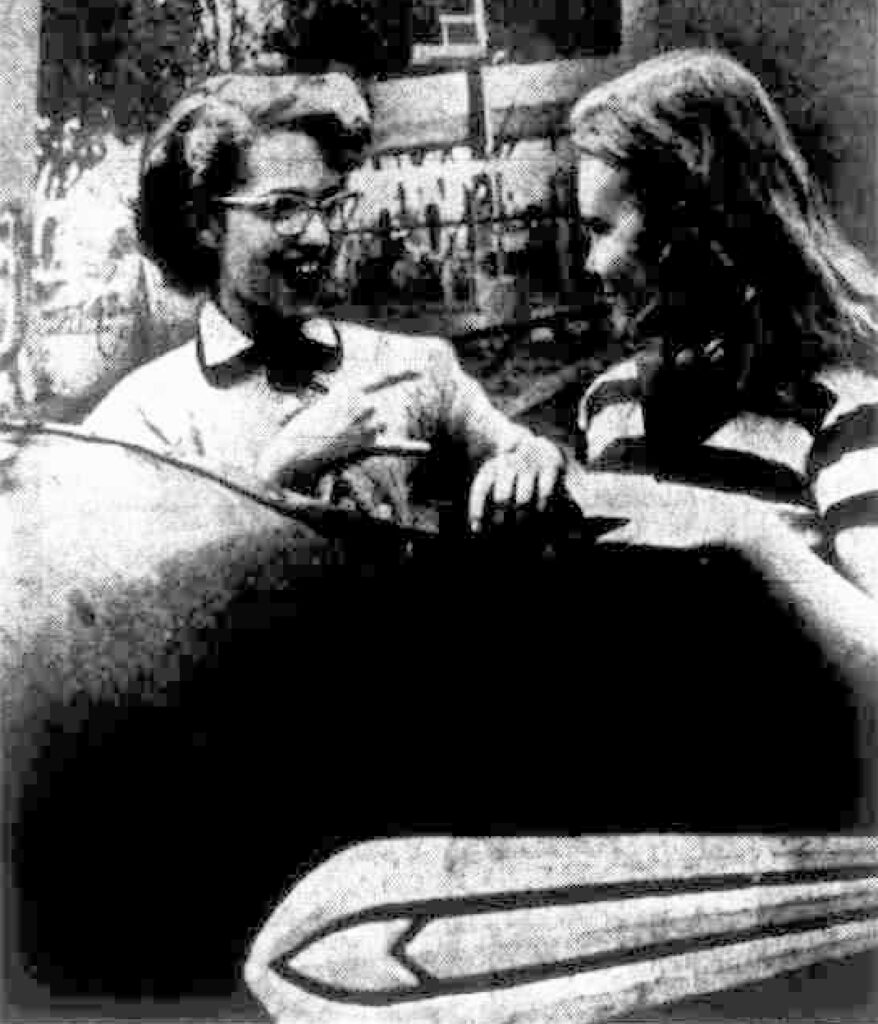
In the 1953 photo above, the planes still have a lighter (or possibly silver) color. The large fire at the park after it had closed for the 1953 claimed several rides, but not the Flying Scooter. A photo from 1954 (below) shows a plane in a new color with silver embellishments on the side. The new paint job may have been to cover smoke damage, or Lagoon just felt they needed a fresh look to go with the rest of what was advertised as New Lagoon in 1954.
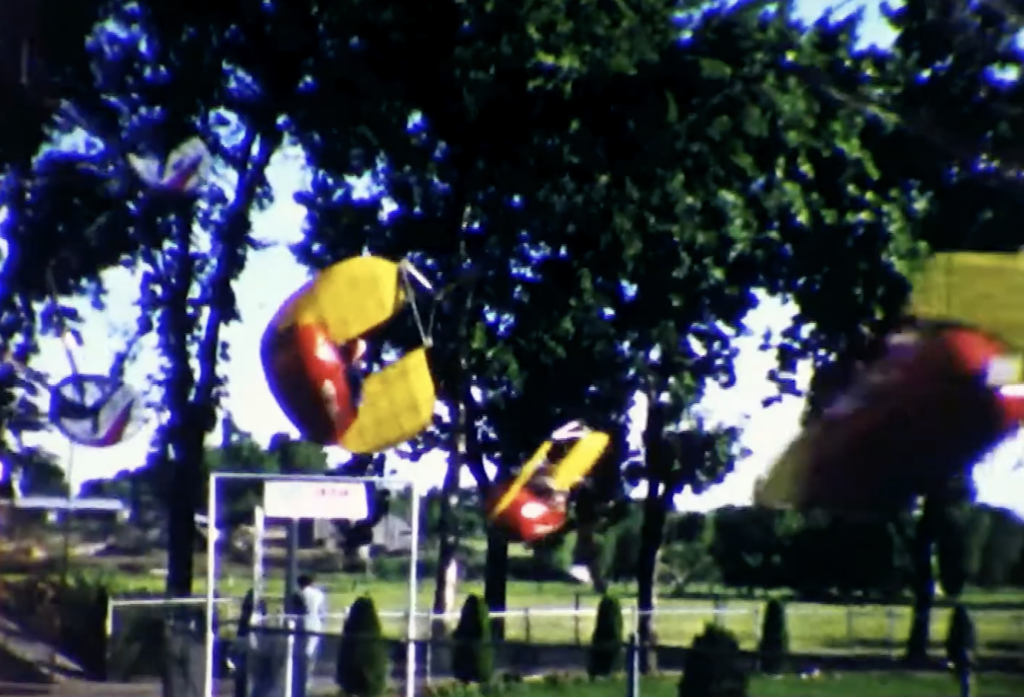
Black and white photos make it hard to know what colors the ride had in the early days. But thanks to film footage by Van Summerill, we know that the 1954 paint scheme had the tubs in red with the rudder and fin (or stabilizer) in yellow.
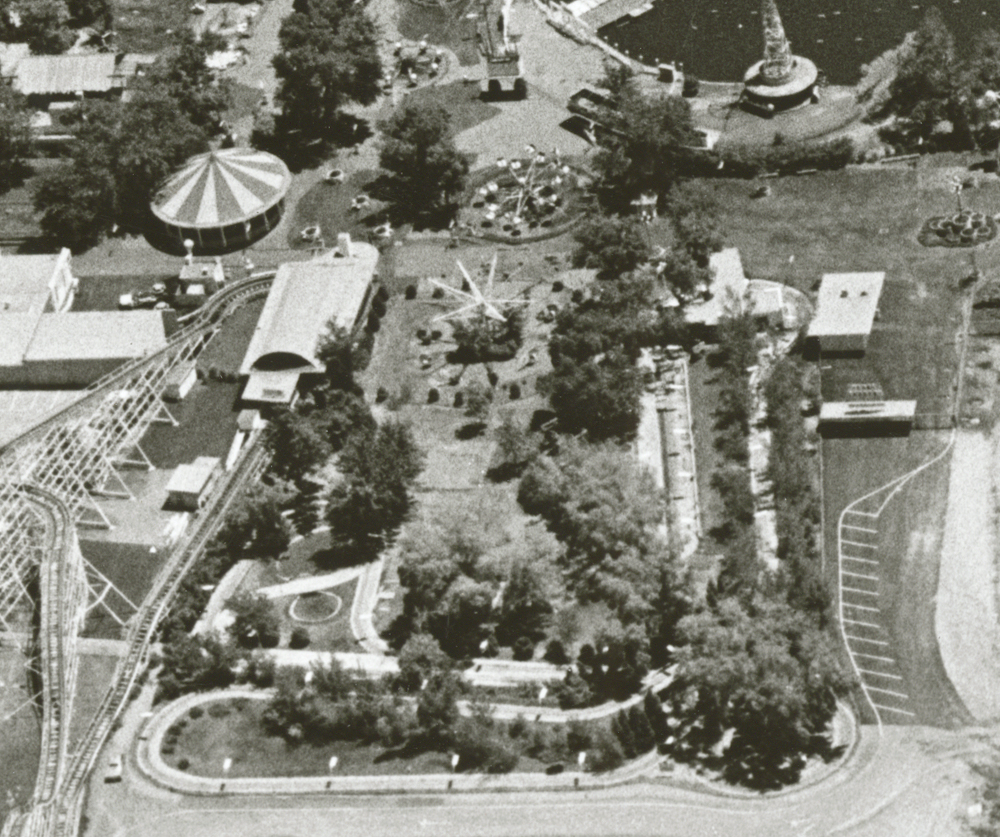
The Flying Scooter was relocated from its first spot when Mother Gooseland was built in 1956. Its new home was only about 200 feet away, directly south of the the Roller Coaster station. Rock-O-Plane had been in that spot since 1954, and was shifted to the south to make room for the Flying Scooter. For a while, this was the south end of the Midway.
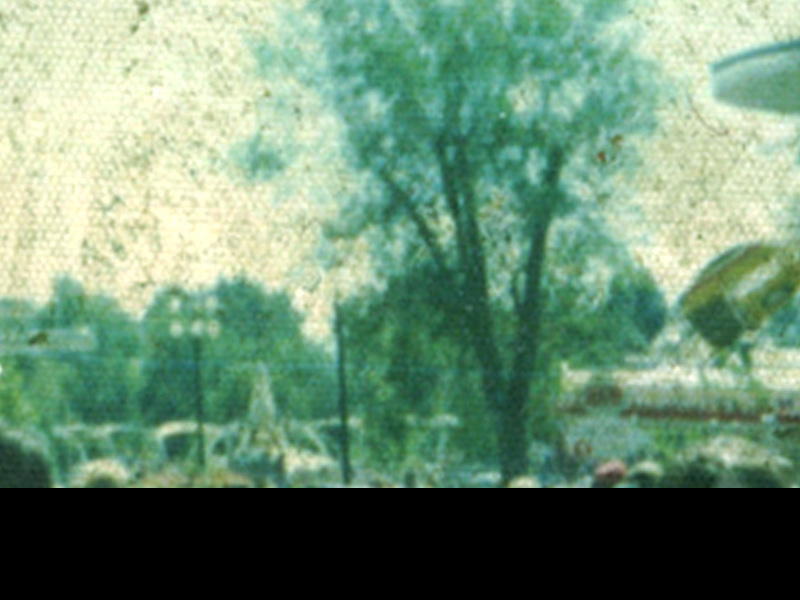
In the original location, there was a paved ring under the planes where riders would load and unload with a circular strip of lawn around the edge of the paved area. This was recreated at the new location by the Roller Coaster, but with even more greenery within the ride enclosure.
One or two small trees grew right next to the tower and several arborvitae trees and possibly even flowers were planted intermittently around the inside of the fence. There were some advantages to this. The grass and trees would’ve provided a cooler atmosphere for riders as opposed to the solid concrete used under the ride in later years. The interspersed arborvitae would also heighten the illusion of speed as the planes flew past.
An anonymous visitor to the website once shared the following memory about the trees:
“It was set up in close proximity with the trees and shrubs so that it always seemed you would fly into them! Of course, you didn’t because they had been trimmed just out of reach.”
Steve from Moreno Valley, CA recalled:
I also remember flying directly towards the trees (that were carefully trimmed to nearly touch the bottom of the vehicles).”
After four years in this location, Speedway, Sr. opened next door. The track began just south of the Flying Scooter and then wound around behind it on the west side.
INTO THE JET AGE
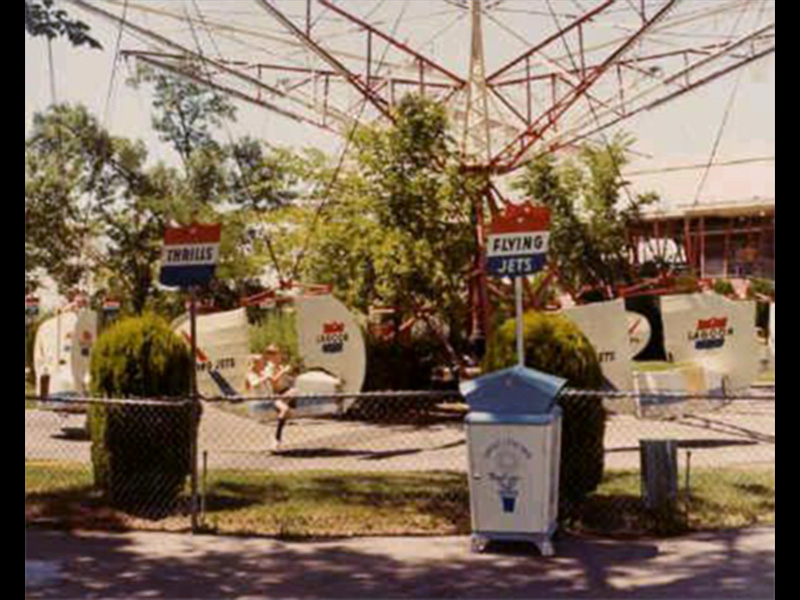
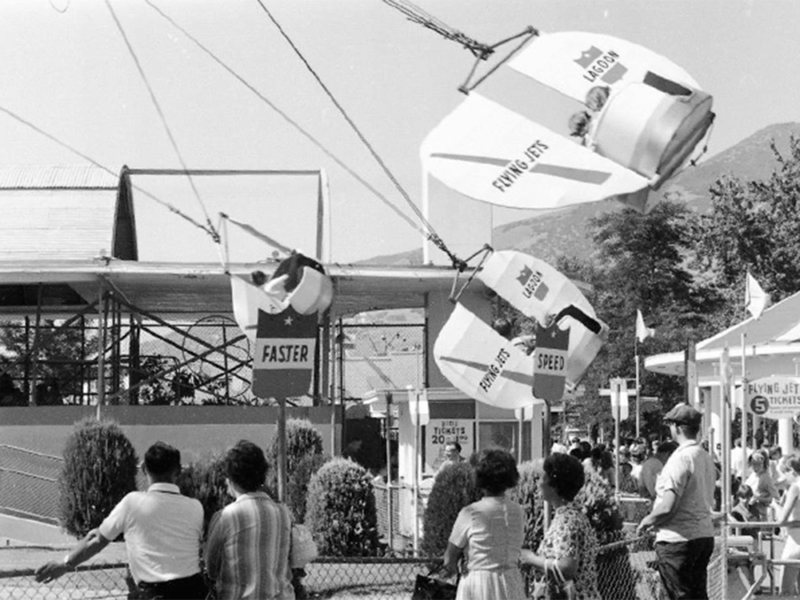
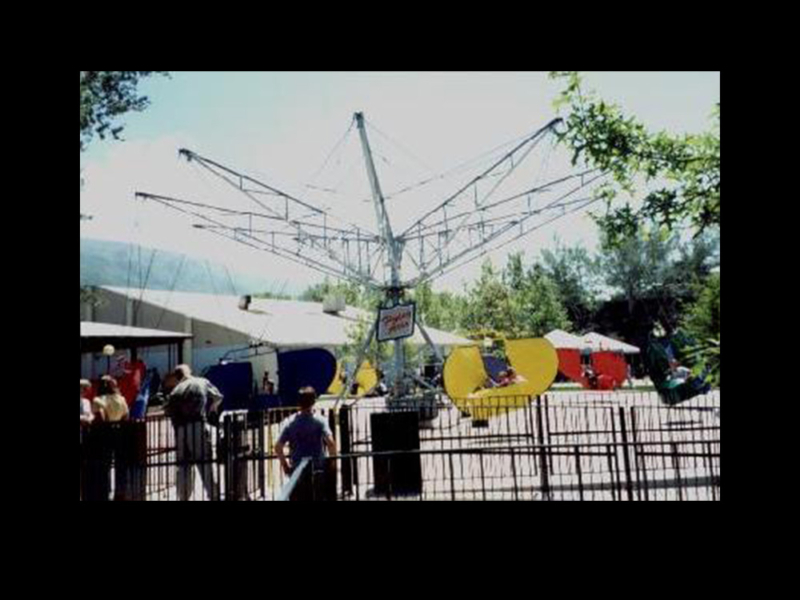
In 1962, all of the planes were swapped out with an updated planes by Bisch-Rocco. Instead of the rounded shape, these had curved sides with a flat bottom. These are the planes still in use today. This is presumably the time when the name changed to Flying Jets with the planes painted to look like compact versions of United Airlines’ passenger jets of the day.
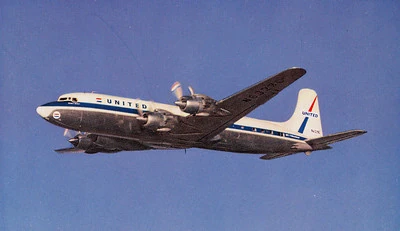
On the rudder was a shield emblem similar to the United Airlines logo, but with “Lagoon” in place of “United”. The fin was painted to match the tail of United planes along with a blue stripe and silver underside.1
The ride’s central tower was painted red with arms in alternating red and white. (Red and white are commonly used for structures around airstrips for better visibility to pilots). There was a large Flying Jets sign on the tower based on the United Airlines logo.
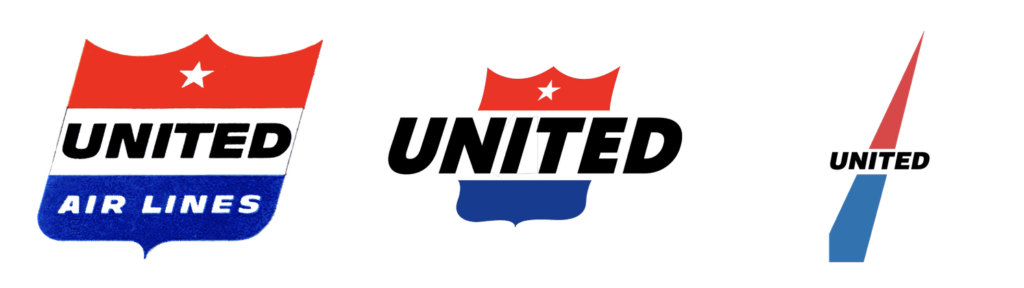
With all of the visual tie-ins to United Airlines, one might wonder if United sponsored the ride. None of the information available right now has any indication of a sponsorship. But it wasn’t unheard of for Lagoon attractions to have a sponsor. Usually, though, they were local companies like Clover Club or Hi-Land Dairy. It may be more likely that, with the new planes, the park simply wanted to give the ride a more modern feel and since United was the first airline to use passenger jets in 1960, that was the airline they chose to emulate.
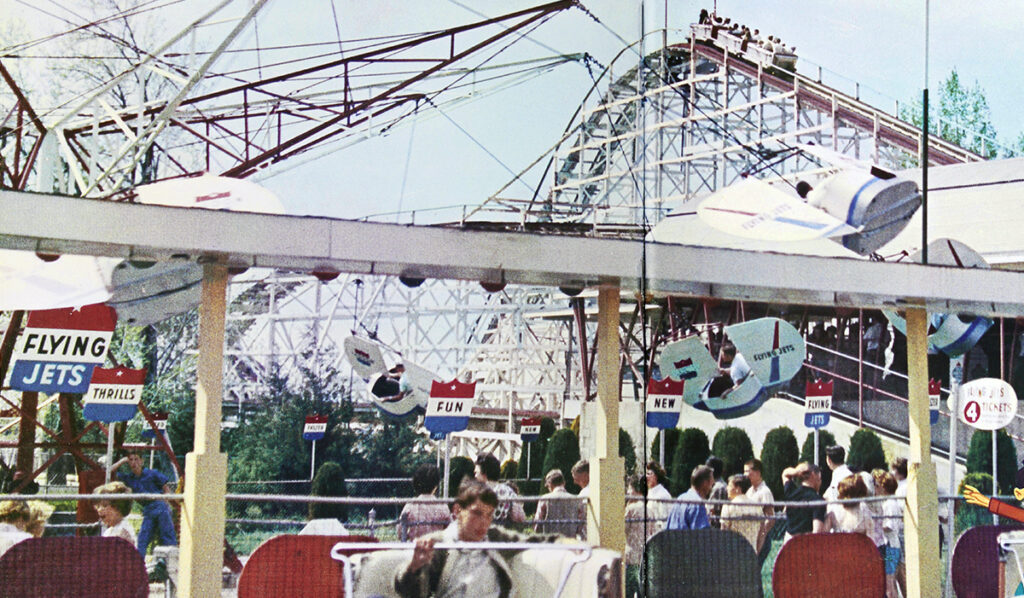
Film footage of the Flying Jets around 1970. From Sharpshooter Productions. Used with permission.
ACE IN THE HOLE
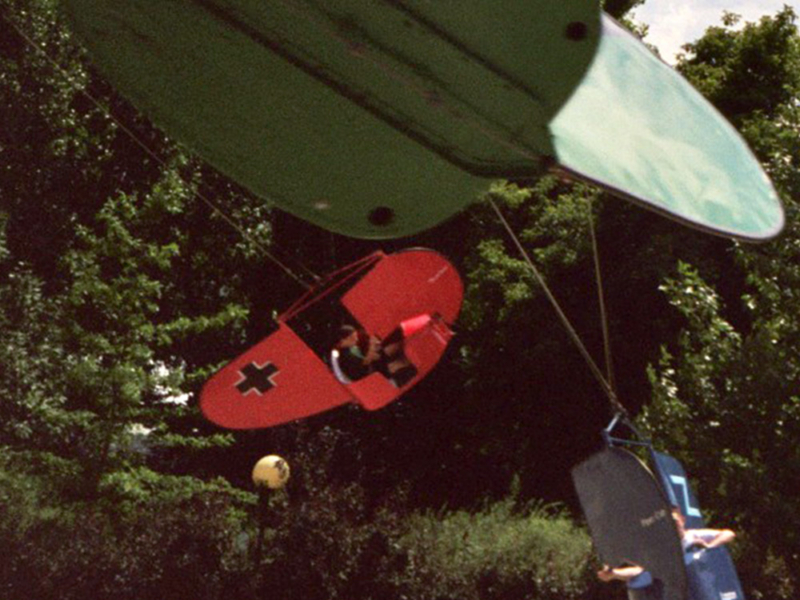
After another decade, the Flying Jets era came to a close and the ride was transformed once again in 1972. This time the park opted for a more historical concept. The uniform look was abandoned in favor of individually designed planes, inspired by well-known airplanes and dogfighters of World War I. The planes were given names like Sopwith Camel and The Red Baron2 and the ride became known as the Flying Aces.
The ride continued to operate between Speedway, Sr. and the Roller Coaster for ten more seasons. Meanwhile, Lagoon was shifting away from hosting popular bands at the park’s Patio Gardens venue and was introducing more and more of their own musical shows and performers. These shows were simple held on small, temporary stages around the park. There weren’t any proper entertainment sites with enough seating for larger audiences. In 1982, a new amphitheater named Lagoon Music Theatre opened in place of the Flying Aces, forcing its relocation. (The amphitheater was in turn replaced by the Lagoon Biergarten in 2019).
Before 1982, Lagoon’s Midway ended at the south end of the Sky Ride. The campground blocked any southward expansion so the Midway began expanding west from the Sky Ride station. For the 1982 season, the westward growth continued with the addition of Musik Express and the new home of the Flying Aces.
Situated just north of Musik Express, the Flying Aces only operated here for one season. In 1983, the south end continued westward once again when Colossus opened accompanied by a food and game building along the south side of the Wild Mouse. The spot where Flying Aces had been in 1982 was now the main thoroughfare to the intimidating new looping coaster. The Aces’ electrical panel was left in place, however, hidden by an odd-shaped bench.
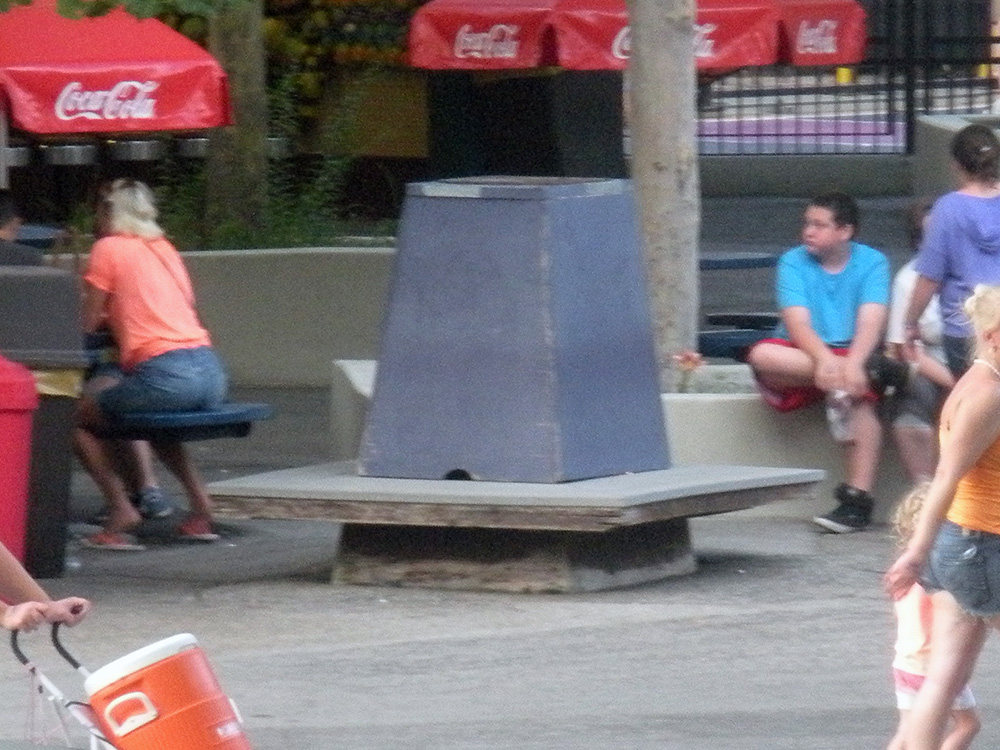
The bench remained until the end of the 2015 season when it was taken out and the electrical equipment was buried (the top of the electrical box can still be seen near the tables there).
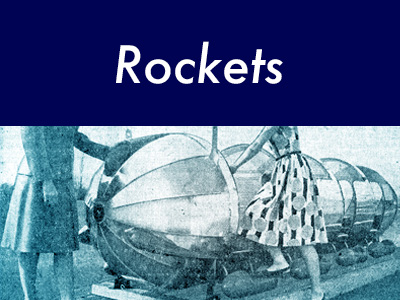
The plan for the Flying Aces as of early 1983 was to have the ride back in the park as soon as 1984. But the location hadn’t been pinned down yet. It seems the ride was mainly removed due to lack of space in the park. When asked by a local paper, Lagoon spokesman Ron Van Woerden mentioned one option being considered was to have it next to Lagoon Lake so the planes could swing out over the water, not unlike the old Rockets ride. That aging attraction was nearing the end of its life by then. It’s probable that it was the Rockets’ location they had in mind, but it would live on a little longer before being replaced by Turn Of The Century in 1987.
The Flying Aces’ housing problem was solved thanks to the ending of a multi-year lease for land north of the park. After many years of holding the Davis County Fair at Lagoon, the county was deciding between extending the lease or finding their own location for the fairgrounds. Lagoon supported keeping the fair at the park and even thought about donating the land to the county for the fair.
By the end of 1984, the lease was up and Davis County opted to move the fair to newly acquired land on the other side of Interstate 15. This opened up many possibilities for Lagoon to redevelop the land previously used as a rodeo grounds and race track. The northern boundary of the park up to that time ended at Jet Star 2, Boomerang and the Sky Ride.
During the Aces’ hiatus, a new motor was added from Falk Corporation of Milwaukee. With the new motor, the ride would now rotate clockwise, instead of counterclockwise like most Flying Scooters. The only other Bisch-Rocco Flying Scooter to spin clockwise is at Knoebels in Pennsylvania (which is said to have changed in 1973 – also after receiving a new motor).
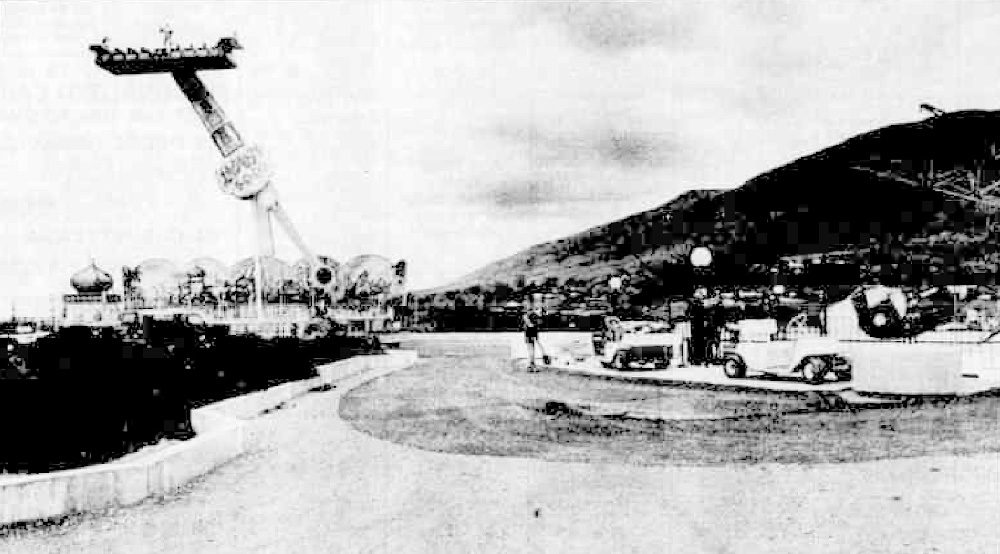
The spacious new North Midway opened in April 1986 with the refurbished Flying Aces placed between Jet Star 2 and the brand new Flying Carpet (which stood where Samurai is now).
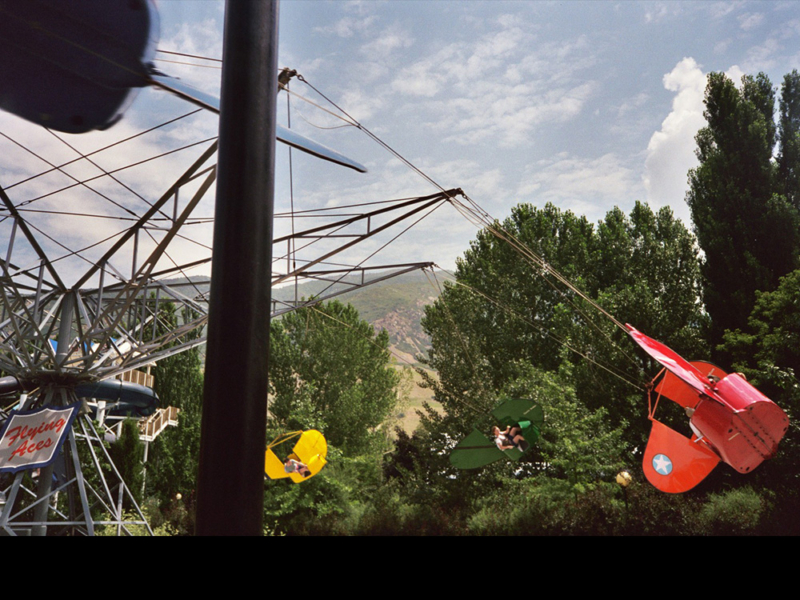
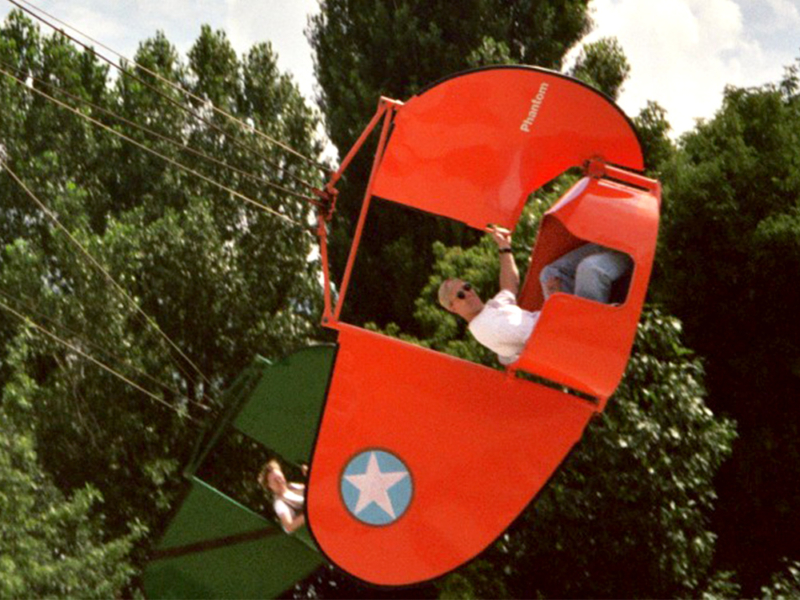
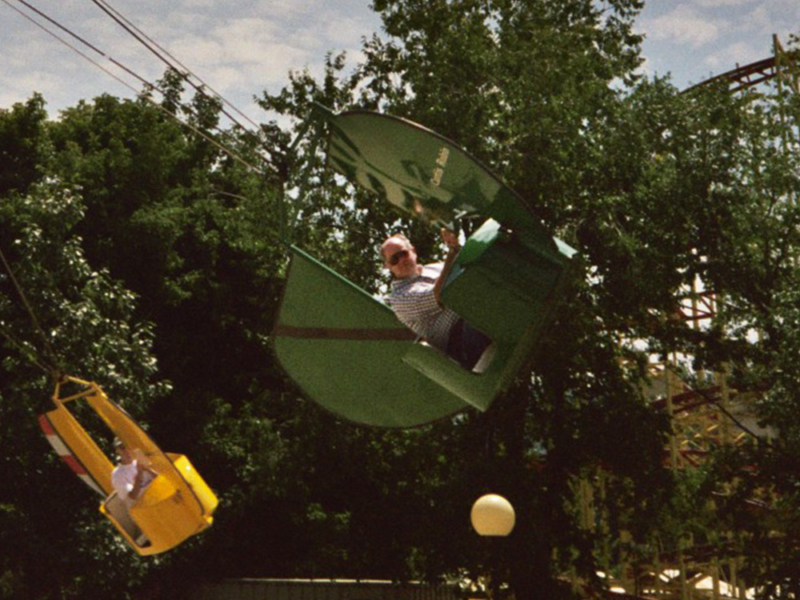
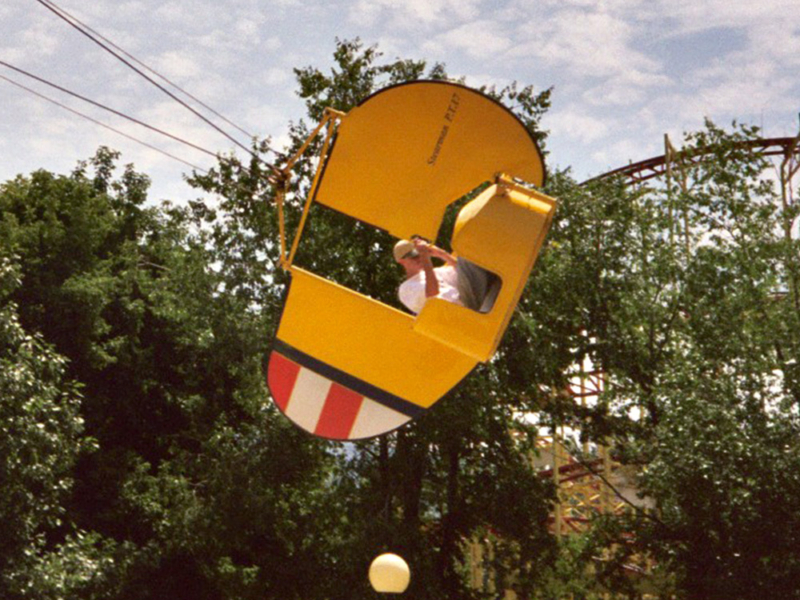
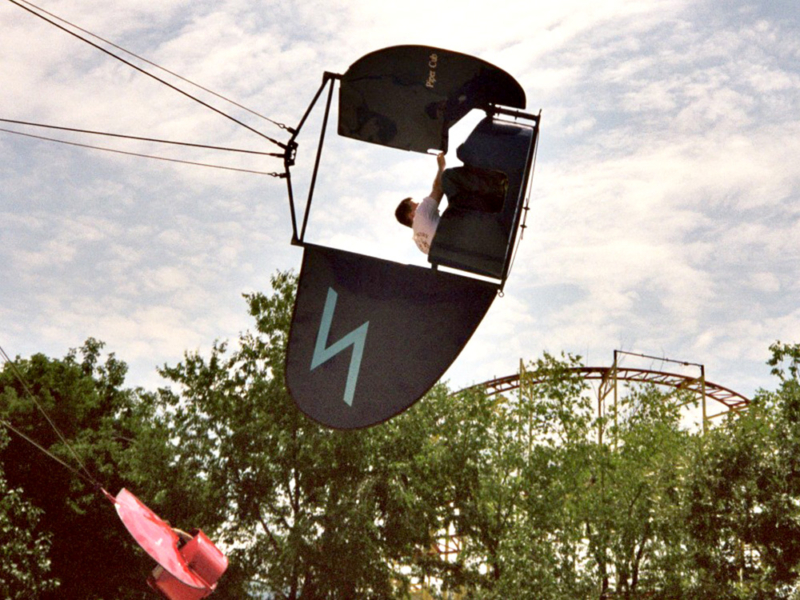
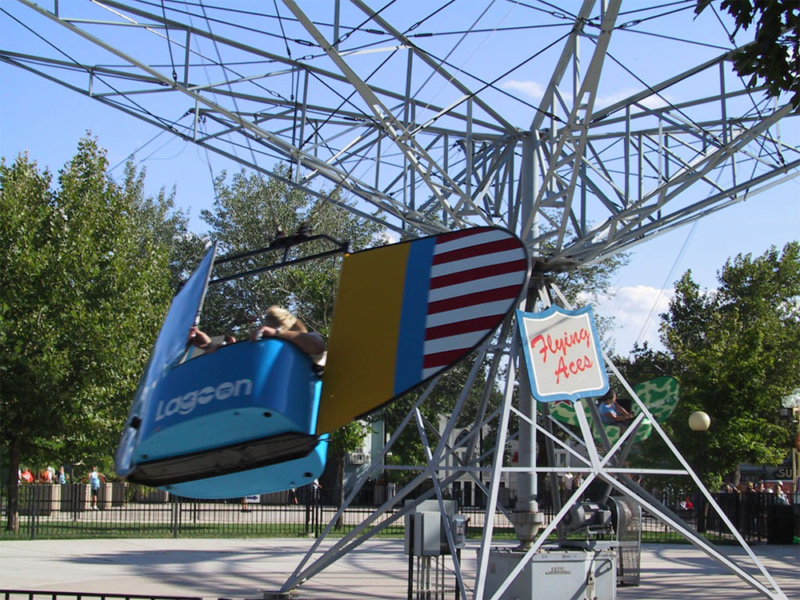
As part of the ride’s refresh, the planes were now painted in various colors with new hardware attaching them to the frames. They also had new names like Phantom, Curtiss Robin, Stearman P.T. 17 and Piper Cub.
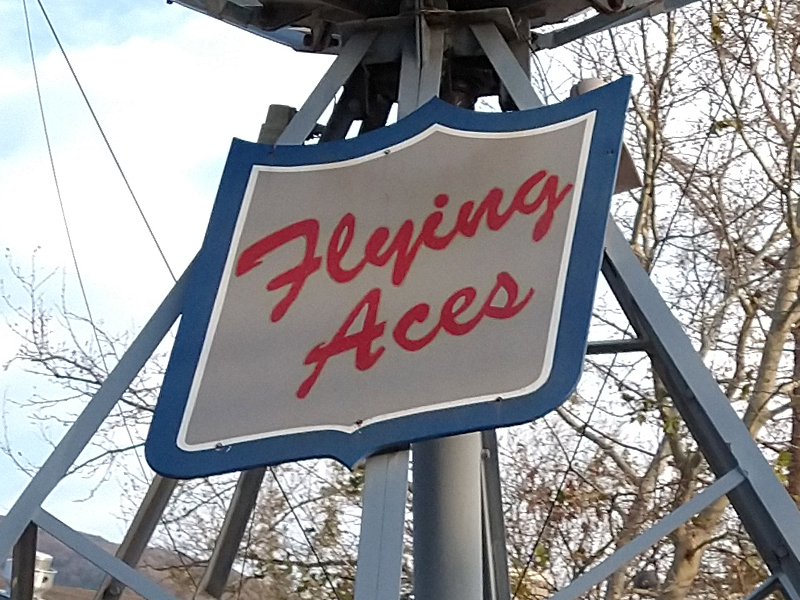
The tower was painted grey and still had a shield-shaped sign mounted on it, like the United Airlines-style sign from the Flying Jets days. It’s either the same sign from the ’60s with new paint or a replacement cut to the same shape as the old one.
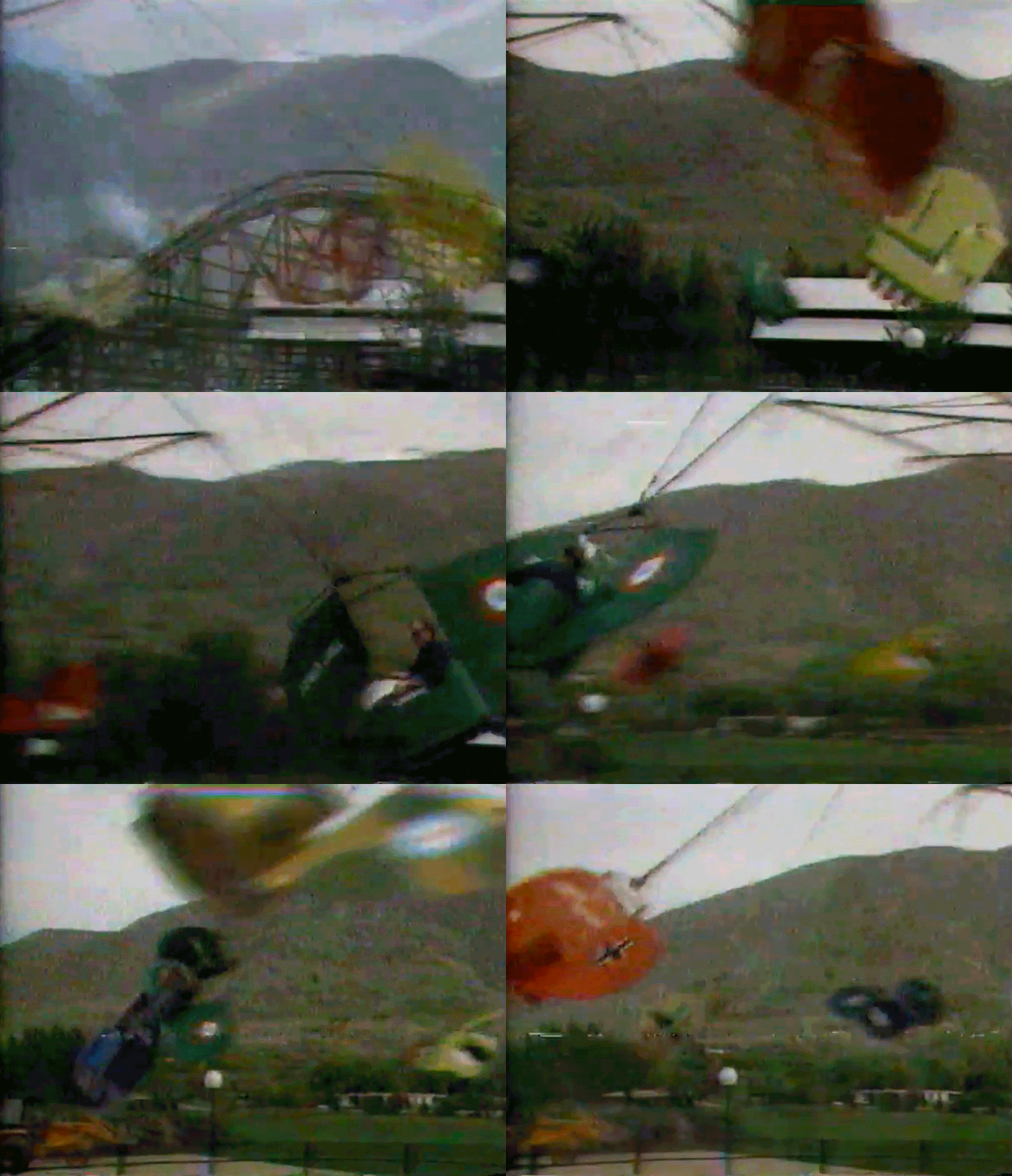
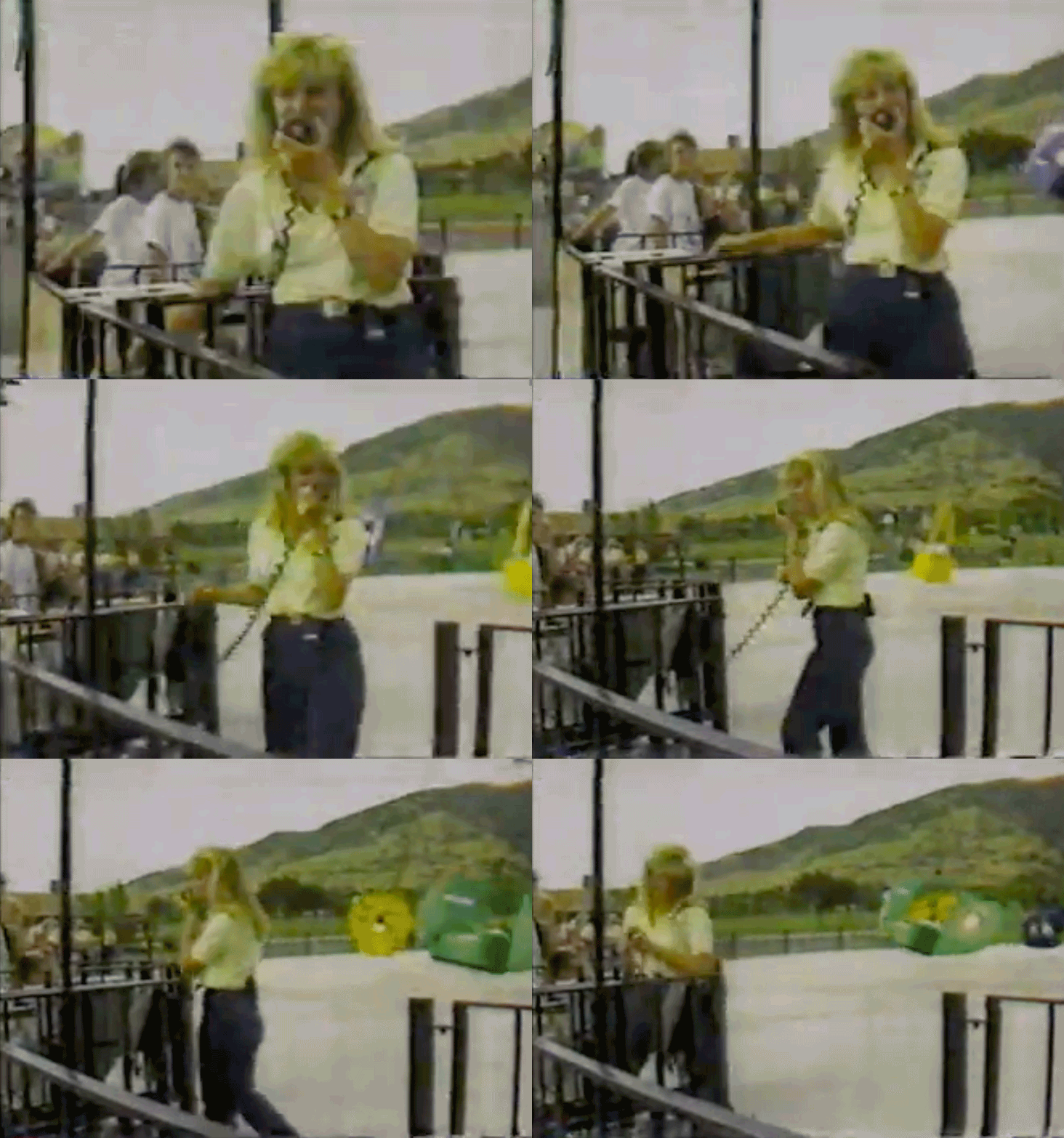
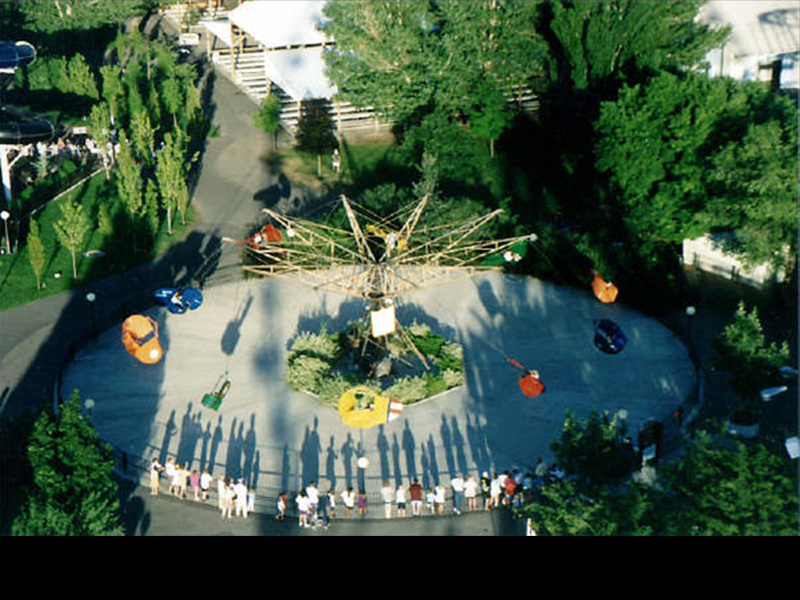
After 13 seasons in this spot, the Flying Aces moved yet again. This time it was so The Rocket could take its place. The Aces were reinstalled a short distance to the southeast on what had been a tree-shaded lawn on the west side of the Meadow Terrace. Opening here in 1999, it would end up being in this spot longer than in any other in its history so far. With The Rocket, Jet Star 2, and later, Air Race as neighbors, Flying Aces fit in well with the subtle, ad hoc “air and space flight” motif of the area.
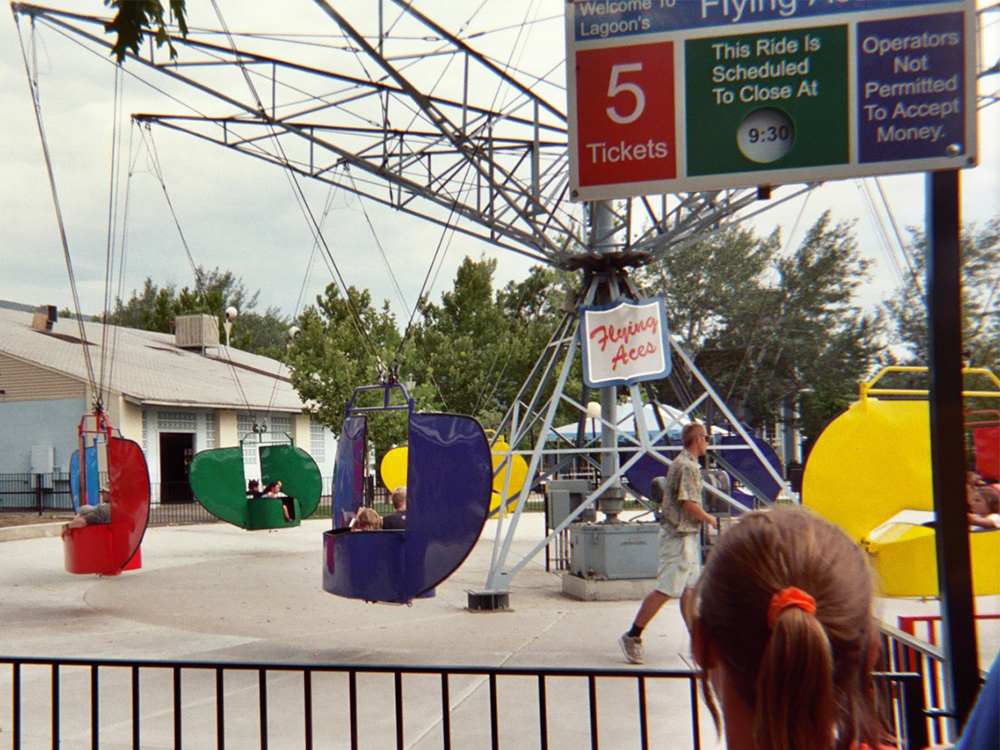
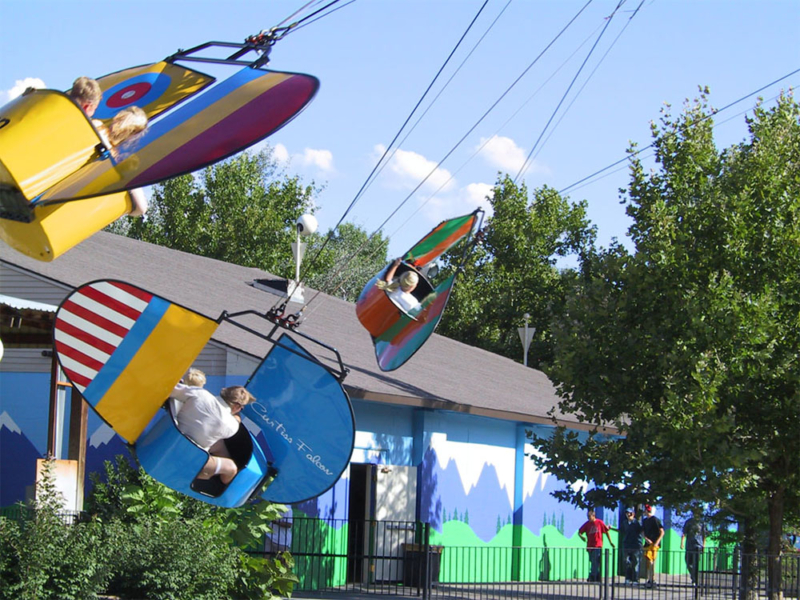
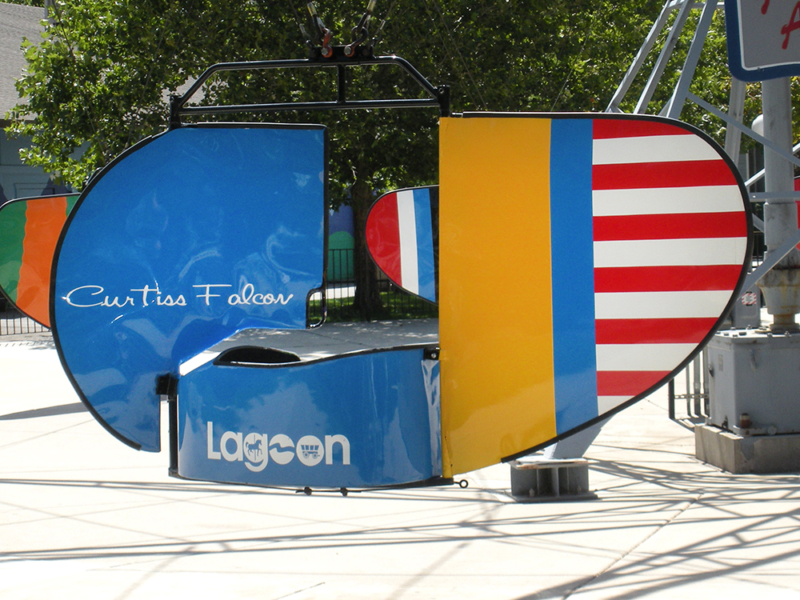
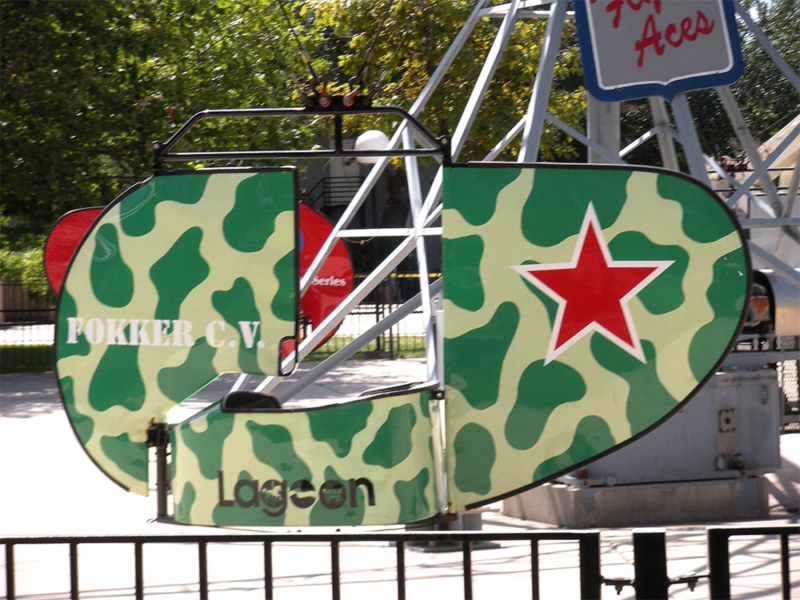
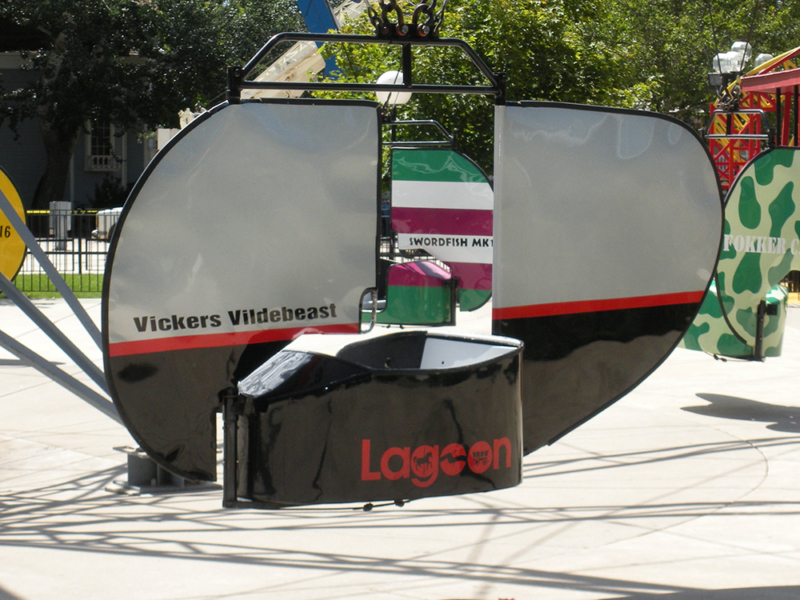
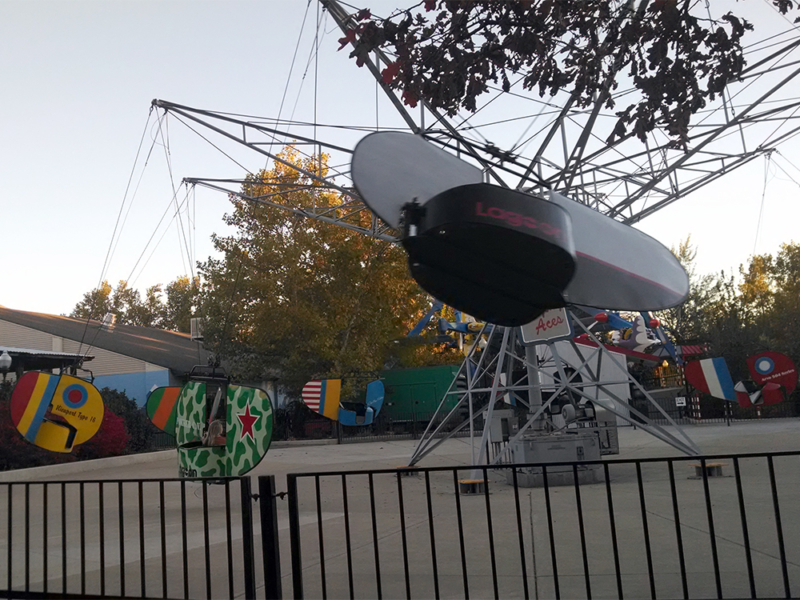
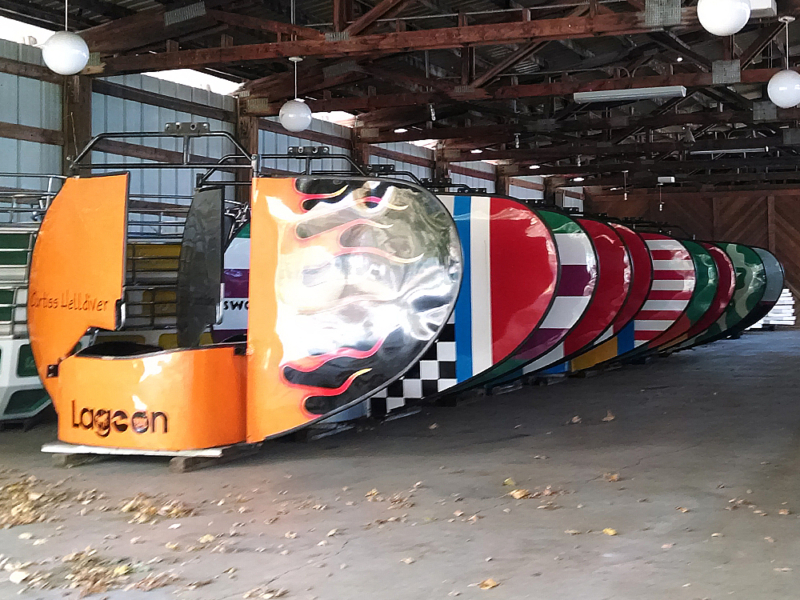
In 2001, guests were surprised to find the planes had been sanded down and repainted without any names or unique designs, just solid colors. There were two of each in red, blue, green, yellow and purple. After Lagoon received numerous comments about the changes, completely new names and designs for each plane were added within a year. The new names and colors added at that time are as follows:
| Name | Description |
|---|---|
| Gloster Gladiator | orange & green vertical stripe, scalloped edges |
| Armstrong Whitworth Siskin | silver with black & white checks, vertical stabilizer stripes in red, white & blue [previously solid blue?] |
| Curtiss Falcon | blue with white lettering, yellow & blue vertical stabilizer stripes, white & red horizontal stripes [previously solid purple] |
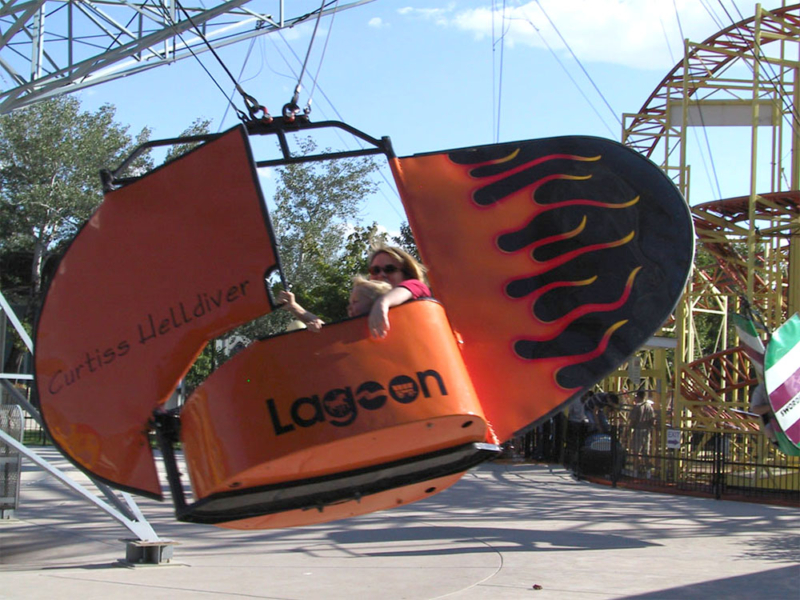
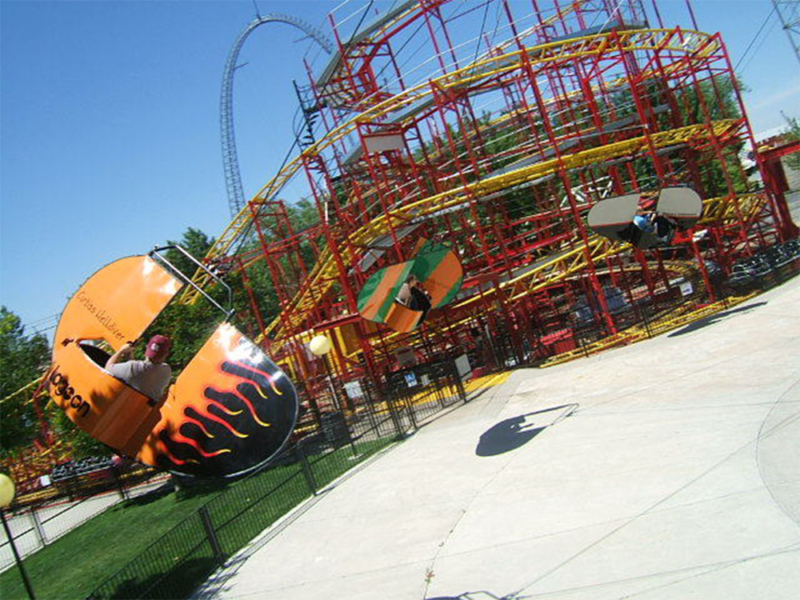
| Curtiss Helldiver | orange & black with flames on stabilizer |
| Avro 504 Series | red with white lettering, white & blue English roundel, red, white & blue stabilizer stripes [previously solid yellow] |
| Fokker C.V. | green camouflage, red & white star on stabilizer |
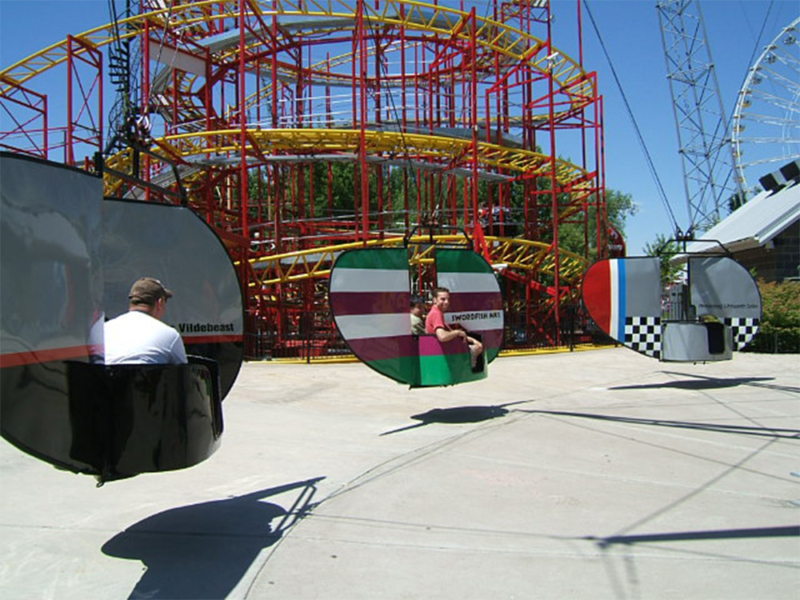
| Vickers Vildebeast | black on bottom & silver on top, divided by a red stripe |
| Nieuport Type 16 | yellow with red & blue roundel on rudder, vertical stabilizer stripes in blue, yellow & red |
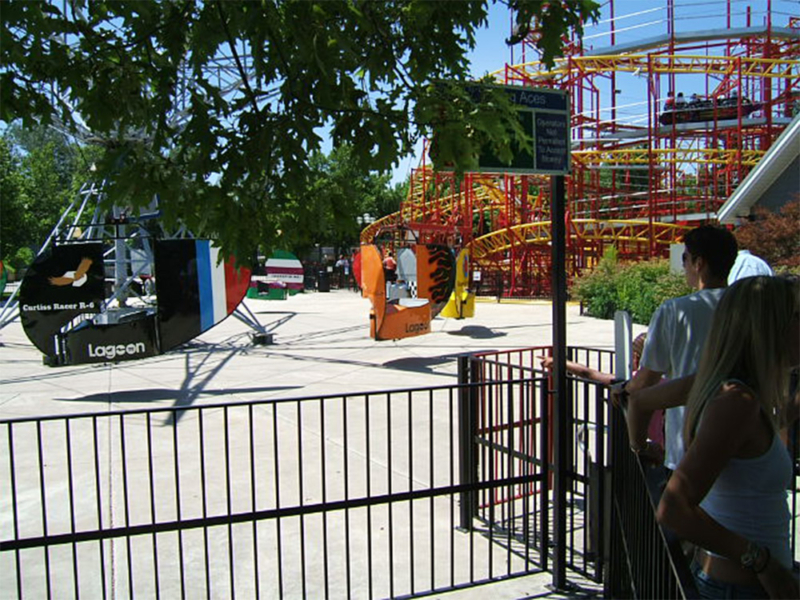
| Curtiss Racer R-6 | black with an eagle on the rudder, vertical stabilizer stripes in black, red, white & blue |
| Swordfish MK1 | green, purple & white horizontal stripes with black lettering |
The tower received a new coat of grey paint around 2005. By the way, the exposed tower is another rare attribute shared with the Flyer at Knoebels. Most models cover the tower in some way with painted boards or metal panels.
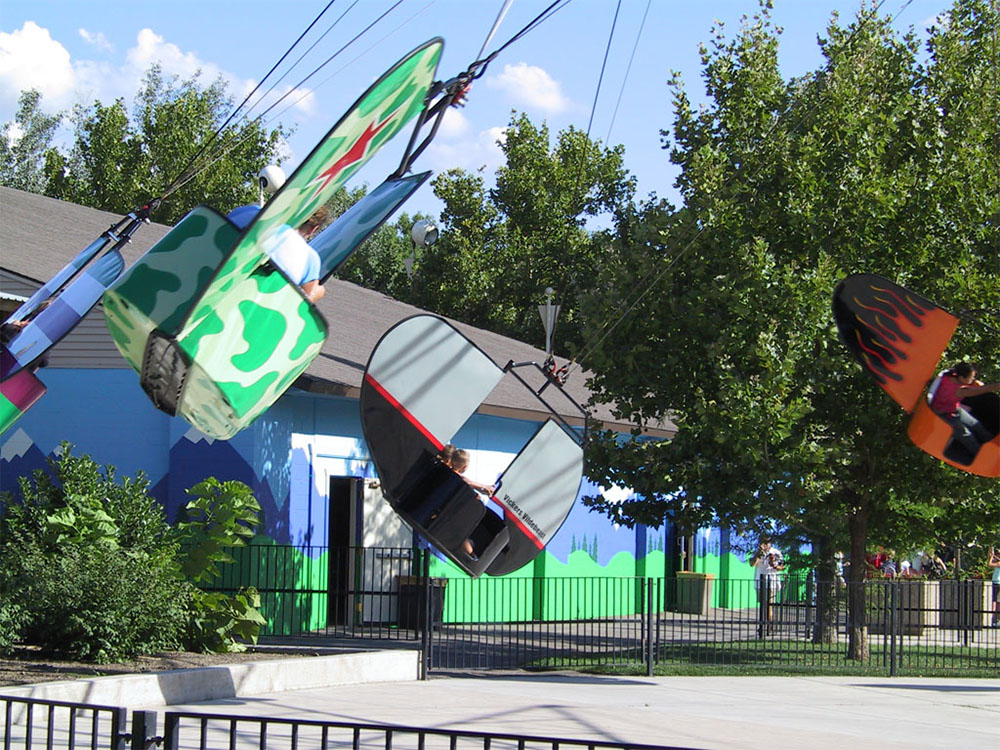
In 2012, Lagoon’s three oldest rides still operating, Flying Aces, the Roller Coaster and the Carousel, were added to the National Register of Historic Places. Flying Aces became the first Bisch-Rocco Flying Scooter on the register. Many believe being added to the National Register adds some kind of government protection to any future changes, but really, the list is a way to identify and document a place’s importance in history and to provide a well-researched argument for keeping it around for future generations to appreciate and learn about.
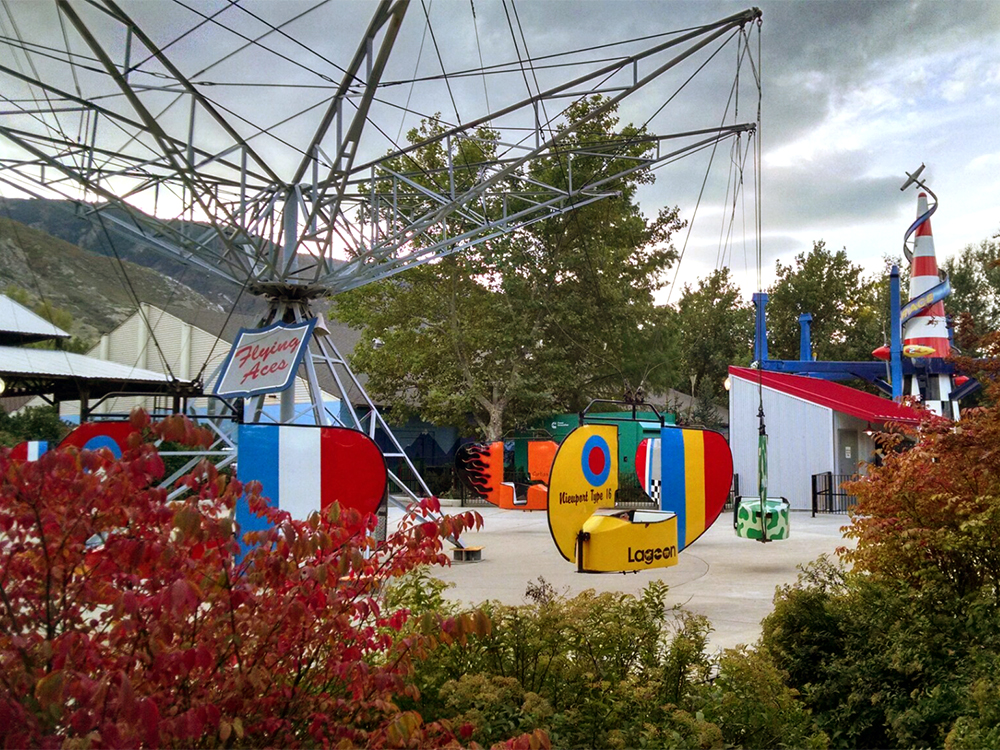
The story of the Flying Aces hasn’t ended yet as changes are currently underway. In the first week of August 2026, guests were shocked when they saw Lagoon was dismantling the ride. Without any official word, it seems clear the move has to do with the new ride planned to replace Jet Star 2, which closed in 2025. So far there has been only been speculation, but it will be interesting to see where the ride lands this time.
PAST LOCATIONS
| Years | Location |
|---|---|
| 1941-1955 | East of Carousel |
| 1956-1981 | South of Roller Coaster station |
| 1982 | South Midway, north of Musik Express |
| (1983-1985) | Closed and removed from the park |
| 1986-1998 | North Midway (current location of The Rocket) |
| 1999-2026 | North Midway (southeast of The Rocket) |

GALLERY
MORE LAGOON HISTORY
REFERENCES
Martz, Maxine. Annual Outing Held by Utah Deaf and Blind. Deseret News, 13 May 1954.
Lagoon Resort Dates Back Before Turn of Century. Provo Sunday Herald, 19 Mar 1972.
Lagoon-Pioneer Village opening for 87th season this weekend. Ogden Standard-Examiner, 2 Apr 1982.
Knowlton, Ron. Park Nearly Ready For Summer Season. Lakeside Review, 30 Mar 1983.
National Register of Historic Places, Lagoon Flying Scooter, Farmington, Davis County, Utah, National Register #12000884. National Park Service, 24 Oct 2012.
Shankar, Prakash. Why is everything at airports painted red and white with checks? Cockpit Voice, 1 Nov 2015.
United Airlines. Logopedia, accessed 28 Feb 2022.
Boeing 720. Airliners.net, accessed 22 Aug 2026.
- The Flyer at Kennywood in West Mifflin, Pennsylvania was painted in a very similar (but not completely identical) design. It operated there from 1965 to 1970. Even after moving to Knoebels in Elysburg, Pennsylvania in 1971, the same design has been used to this day. They’re different enough that it’s not likely Bisch-Rocco was painting them that way. A photo of Lagoon’s Flying Jets in the United Airlines style (shown in the photo gallery on this page) was found in the Knoebels collection. Perhaps Lagoon’s Flying Jets were used as a reference for Kennywood and/or Knoebels. ↩︎
- These are the only confirmed names given to the planes in 1972. Without any other information, it could be that there were only two alternating designs, similar to the Red Barons in Kiddieland today. ↩︎
Leave a Reply